The
Milodon was a giant sloth about twelve feet high that lived in these parts up
to about 14,000 years ago when it became extinct, but whether by the hand of
man or climate change is uncertain. What is certain is that the remains of
these things were found in this mighty cave that we visited.
The
cave had been carved out by sea action millennia earlier, the width of it was
about 150 metres and the depth about four or five hundred metres. It was very impressive, and we much enjoyed
our visit there.

Milodon's eye view of Chile
We
also saw black neck swans for the first time whilst we were staying at Puerto
Natales. There were dozens of them bobbing up and down on the windswept sound
just outside the town, several of them with little cygnets also bobbing up and
down in their wake.


Black neck swan with cygnets
We
left Puerto Natales on Friday and made our way to Torres del Paine national
park. We had sight of the huge and very beautiful massif beyond the lakes long
before we reached the park.


On the road to Torres del Paine

Guanaco
The
park itself was busy with visitors, many of them hiking the entire circuit
which apparently takes about seven days.
Needless to say, we decided against that particular challenge, but we
spent a wonderful couple of days camping in the park, walking at the base of
the massif and climbing the Mirador Condor which gave us the most spectacular
views.


Camping at the foot of Torres del Paine massif
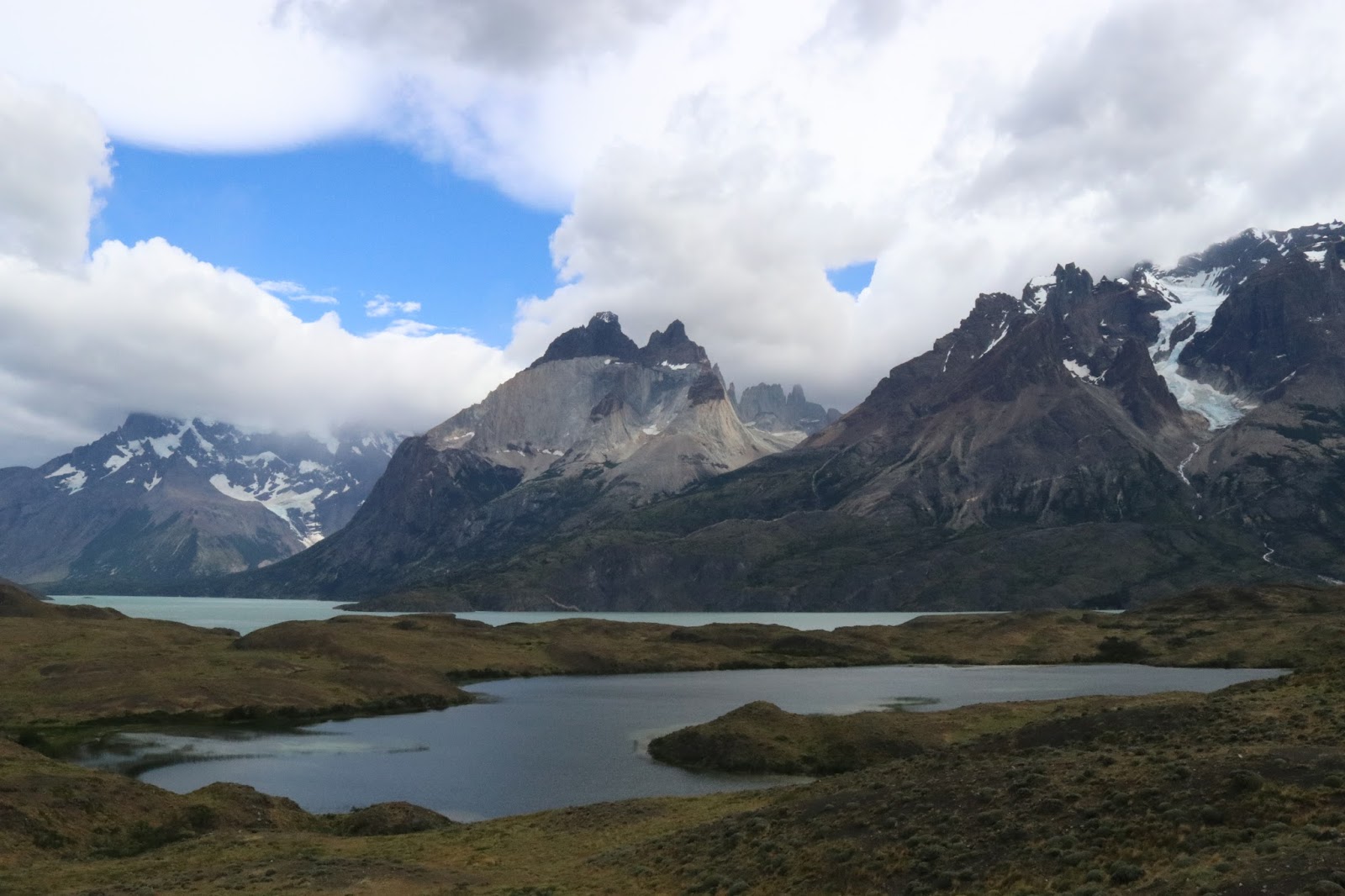
Torres del Paine
The
savage sharp toothed pinnacles of the Torres de Paine mountains rise
precipitously from the plain and are very impressive. The more sheltered southern slopes were still
clad in show fields and these were melting to form rivulets of water and
waterfalls cascading down the side of the mountain to gather together in big
snowmelt rivers.


The Towers at Torres del Paine

Torres del Paine showing rock colour variation
From
the top of the Mirador Condor we could see beneath us a series of lakes and
lagoons, brilliant turquoise with the shadows of the clouds scudding across
them, and a pattern of islands of various shapes and sizes distributed in the
water. What we didn’t see was any condors, but then you can’t have everything.


Torres del Paine from across the lake
It was
very windy and on the first night it felt a little bit like sleeping at the top
of a poplar tree during a hurricane. The
tent was whacking around in the wind as though it was minded to go into orbit
and we spent a little time wondering whether we would be looking at the stars
ere long. We’re pleased to report that the tent behaved impeccably.


Armadillo patrolling our campsite
We
left the park and the mountain behind us on Sunday 4th February,
crossed back over the border from Chile into Argentina and headed north to the
town of El Calafate. The 250 kilometre
drive itself across the flat Patagonian steppe, much of it on long straight
dirt road, was exceedingly boring. There was the occasional herd of guanaco,
and a few rheas, but mostly there was dust, dust which got in our eyes and in
our ears and nose and inside the vehicle and generally was a nuisance.


Family of guanacos
El
Calafate is situated on the south shore of Lago Argentino and is very close to
the Parque Nacional los Glaciares. This
apparently is Argentina’s second largest national park, stretching about 170
kilometres along the Chilean border and with almost half of it covered by the
Southern Ice Cap. El Calafate is a pleasant if somewhat touristy town.
There
is a wetland area covering about three or four hundred acres on the edge of the
lake which we decided to visit, Alan as always accompanied by his telephoto
lens. It was modestly trailed as the municipal
reserve so we weren’t expecting very much.
However, we were wrong.

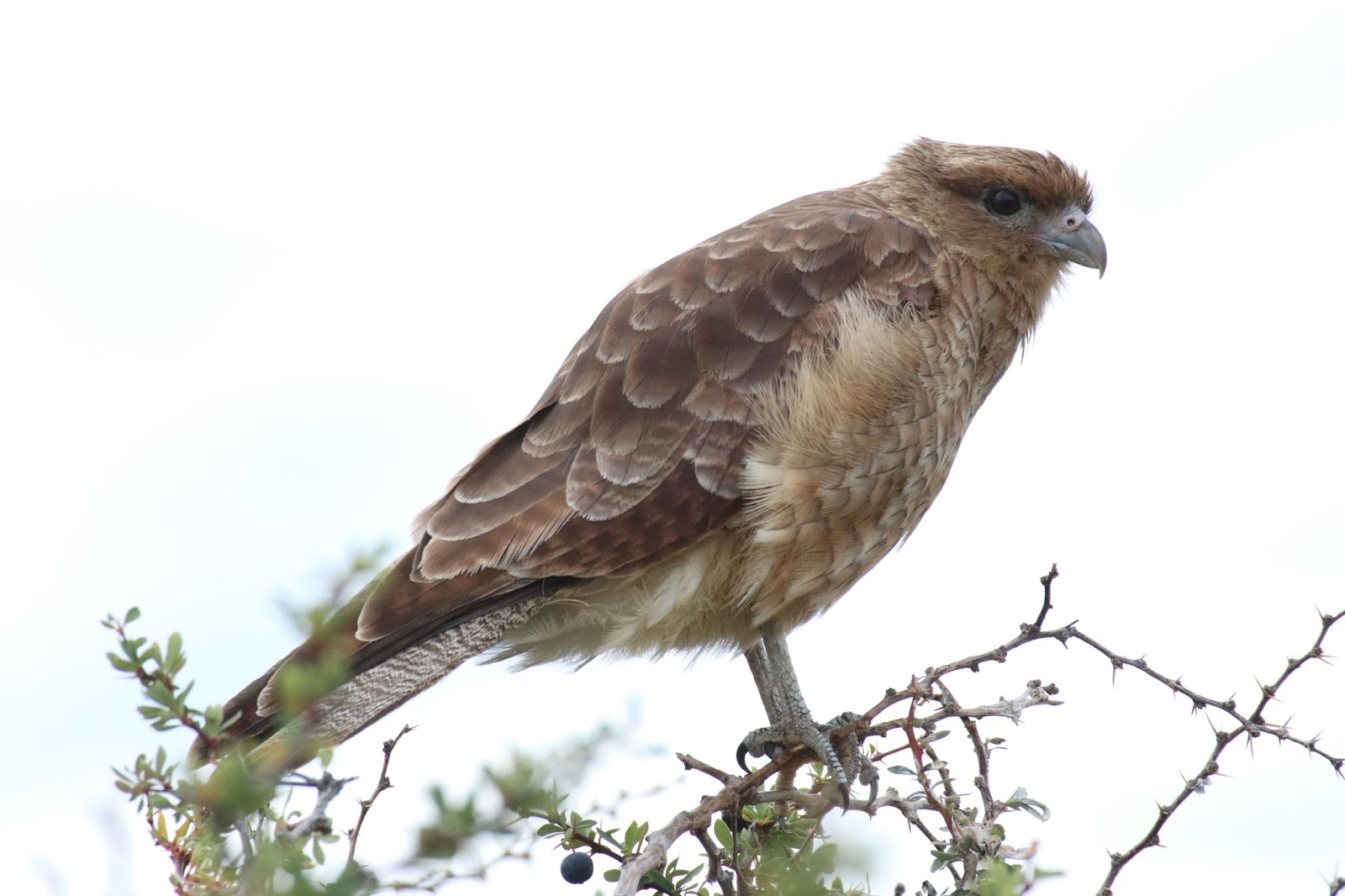
Cinereous Harrier, El Calafate Wetland

Male Upland Goose

Female Upland Geese
We
both agreed that we have never seen so many diverse species of bird in such a
small wetland habitat. There were many
species of duck and water fowl, Cinereous Harriers, long tailed larks,
spectacled tyrant birds, black necked swans, Coscoroba swans and three
flamingos standing on one leg looking as though they were pretending to be
lollipops. We spent several hours there
and much enjoyed walking the trails in the very well managed reserve.


Black Faced Ibis

Female Yellow Billed Pintail Duck
Our
main reason for staying at El Calafate was to visit the huge Glacier Perito
Moreno, one of the few accessible glaciers in the world. On Tuesday morning we duly drove 70
kilometres along the access road and then parted with the lower half of our
wallets to gain admission into the national park. It was worth it.
The
glacier is between sixty and a hundred metres high, up to about five kilometres
wide and thirty kilometres long.
Periodically, as we were looking at it there was a sound like a pistol
shot which heralded the fall of a big lump of ice falling off and then
splashing into the turquoise water below.


Glacier Perito Moreno

Sue at the Glacier

Bits of glacier waiting to calve
When
seen from the top we thought the glacier looked a little bit like a frozen army.
The surface of the ice has been eroded and melted into a series of crevasses,
domes, and shapes, some of which appear to have eye holes and some mouth holes,
and it appeared to us for all the world like a ghostly army that had been
transfixed by some mighty wizard. The
sight of this huge expanse of ice was unforgettable.


Glacier showing perspective

View of the glacier from the road
On
Wednesday we left El Calafate to continue north on the notorious Ruta 40,
notorious for being one of the longest, wildest and least travelled roads in
the world. Che Guevara apparently travelled along much of it on his famous
motorcycle jaunts.
We
covered 350 kilometres on the first day and it was mind bendingly boring for
much of the way. The only thing that relieved the tedium was the patterns of
the clouds that swayed and swirled above us.
We invented a game to try and find things that were of interest and that
would help keep Alan awake whilst driving.
The game was called guanacos and trees with an additional bonus point
for rheas. The idea was that the first
person to see one of these would get a point.
Now when we mention that after 350 kilometres we only saw about six
trees and ten guanacos and one small flock of rheas you get the picture that it
was not a scenic route.

Ruta 40 - miles and miles of f**** all
Shortly
after our lunch stop we were flagged down by a young couple standing in the
road in evident distress. They had a problem with their fuel pump or maybe
their fuel filter but, either way, their little black car was not going
anywhere. For once on our travels we
were able to offer help rather than seek it and we duly towed them for about 80
kilometres (30 kilometres of it on dirt road) into the little town of
Gobernador Gregores.
This
was followed by a slightly embarrassing episode for Alan which involved him
being kissed by a perfect stranger who was hugely appreciative of what we had
done. That was all very well but Alan is
a Yorkshireman and not used to being kissed by a bloke!
That
said they were jolly nice people and ultimately they arrived at the same
campsite that we were staying at. After a while, when we were sitting in front
of our fire enjoying a slightly carbonised sausage, they turned up with some
ceremony and gave us two large mugs inscribed with Ruta 40, an unnecessary but
hugely appreciated gesture.
All in
all, it was a memorable day, not just for the six trees, not just for the 350
kilometres of stuff all but also for the appreciation shown by two Argentinian
strangers for our help in towing them for fifty miles.
We
drove a similar distance on Thursday, but the landscape became slightly more
interesting with more hills and more bends in the road. We had been given the location of an
interesting canyon by a fellow traveller which we found quite easily once we
turned off Ruta 40. The canyon known as
Canacoles Chico turned out to be the most isolated but the most wonderful place
to wild camp.

Wild camping in the Canacoles Chico Canyon
At the
bottom of the canyon was a dried up salt lake which was probably a river
bed. The walls of the canyon were high,
striated red and cream sandstone, carved and buffeted by the winds of centuries
into strange shapes, caves, hollows, and turrets. Alan went to have a look in
one of the caves and found it to be full of guanaco bones although we could
only speculate on how they got there.

Sunset in the canyon
It was
a most delightful wild and wonderful place, nobody for miles around and the
rocks of the canyon face constantly changed from black to red to white as the
clouds passed and the shafts of sunlight luminated the cracks, caves and
crevasses which constituted the walls of the canyon.


A shovel comes in very handy when you're wild camping
On
Friday morning we drove a short distance to a much larger canyon, the canyon of
the Rio Pinturas where we visited the amazing Cueva de las Manos. This is one
of the major cultural and archaeological sites in South America and was
declared a World Heritage Site twenty years ago.


Rio Pinturas Canyon

Path to the Cueva de las Manos
The
Cave of Hands has a series of galleries which contain hundreds and hundreds of
pieces of cave art. Many of these are
stencils of human hands which apparently were executed by means of the person
getting a mouthful of colour pigment and blowing it through a hollow bone
around the outline of the hand. There
are scenes showing guanaco being hunted both with spears and with bola, there
are mythical creatures and also a couple of representations of women giving
birth which they appear to have done from the standing position.


Cueva de las Manos - appeal from the past

Guanaco hunt

Mythical monsters
The
paintings which are in red, orange, black and white are quite beautiful in
their own way and are remarkably well preserved. The oldest of the paintings
are 9,000 years old and gave a fascinating insight into the lives of these
hunter gatherer people over several millennia.

After
the fascinating visit to the Cave of Hands we travelled the last couple of
hundred kilometres to the border town of Los Antiguos. There we managed to sort out a minor problem
with the truck and caught up on the usual admin and domestic chores. Yesterday
we crossed the border for the fourth time to the little town of Chile
Chico. Today is Monday 12th
February and tomorrow we will continue our journey north on the Carretera
Austral.
More than 800 hands, several thousand years


